Changing tires on a Nissan Altima while sticking to the stock wheel specifications ensures your car handles safely and performs as designed by the manufacturer. Using the right size, load rating, and speed rating keeps your ride stable, especially during turns or sudden stops. It also prevents issues like uneven wear, poor fuel efficiency, or warning lights on the dashboard.
What does "aligning with stock wheel specifications" mean for a Nissan Altima?
It means replacing tires with ones that match the original equipment (OE) size listed on the driver’s side door jamb or in the owner’s manual. For most Nissan Altima models, this is typically 215/55R17 or 225/45R18, depending on the year and trim. The rim diameter, width, offset, and bolt pattern must also stay the same. Using mismatched wheels can affect steering feel, suspension stress, and even tire pressure monitoring system (TPMS) accuracy.
When should you replace tires using factory specs?
You should follow stock specs when replacing tires after wear, damage, or seasonal change. If you’re replacing just one or two tires, always match the new ones to the existing pair in size and tread type. Mixing different sizes even within the same model year can throw off handling and cause vibrations.
For example, if your 2016 Altima has 215/55R17 tires and you need a replacement, stick with that exact size. A common mistake is swapping to a wider tire like 225/50R17 without checking clearance or alignment. That might look sportier but can rub against fenders or interfere with suspension components.
How to check your Altima’s correct tire size
Look at the sidewall of any current tire. You’ll see a code like “215/55R17.” This tells you the width (215 mm), aspect ratio (55%), construction type (R = radial), and rim diameter (17 inches). Confirm it matches what’s printed on the door jamb sticker. If the sticker is faded, refer to the official tire replacement guide for your specific model year.
Step-by-step: Changing tires while staying true to stock specs
- Use a wrench to loosen the lug nuts slightly before lifting the car.
- Place the jack under the vehicle’s recommended lift point near the wheel well.
- Lift the car until the tire is off the ground, then remove the lug nuts and take off the old tire.
- Mount the new tire, aligning the valve stem with the hub center.
- Hand-tighten the lug nuts in a star pattern to avoid warping the brake rotor.
- Lower the car slowly, then fully tighten the lug nuts with a wrench in the same star pattern.
- Double-check torque settings using a torque wrench most Altimas require 80–90 lb-ft.
After installation, drive slowly for the first 50 miles and recheck lug nut tightness. This helps prevent loose wheels and potential accidents.
Common mistakes to avoid
Don’t skip checking the spare tire’s condition. Many people forget that spare tires have expiration dates and aren’t meant for long-term driving. Also, don’t assume all “17-inch” tires are interchangeable. Even with the same diameter, differences in width or offset can cause clearance problems.
A frequent error is not rotating tires every 5,000 to 7,500 miles. Rotating helps even out wear and extends the life of your set. If you’ve been driving on mismatched tires, get an alignment check afterward to avoid pulling to one side.
Why matching stock specs matters beyond safety
Using non-OE tires can void certain warranties, especially those tied to performance or drivetrain systems. It also affects how the TPMS works. If the system detects a mismatched tire size, it may trigger false alerts or fail to detect real pressure loss.
For detailed steps based on your model, including torque specs and recommended tools, review the step-by-step procedure for older Altima models. If you're unsure about compatibility, consult a trusted mechanic or use the guidance on proper replacement techniques.
For inspiration in choosing tire designs that complement your Altima’s look, explore unique typefaces used in automotive branding through font name.
Next step: Check your tire size and plan your replacement
Grab a flashlight, open your driver’s door, and find the sticker inside. Write down the tire size. Then, buy tires that match exactly. Avoid online deals that promise “better performance” with larger sizes unless you’re sure they fit. When in doubt, stick to the original specs your Altima will thank you with smoother rides and fewer surprises.
 Replacing Tires on a Nissan Altima with Factory Specifications
 Proper Tire Mounting Procedure for the Nissan Altima Oem Size
 Installing New Tires on Your Nissan Altima
 Understanding Nissan Altima Stock Wheel Specifications
 Changing Tire Size Affects Altima Fuel Economy and Handling
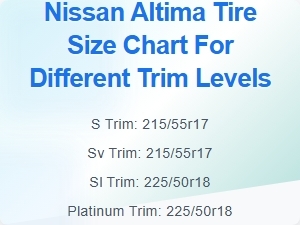 Nissan Altima Tire Sizes for All Trim Levels