Replacing tires on a 2005 Nissan Altima using original equipment guidelines means choosing tires that match the factory specifications for size, load rating, and speed rating. This isn’t just about fitting new rubber it’s about keeping your car safe, handling as it was designed, and avoiding issues like uneven wear, poor fuel economy, or warning lights on the dashboard.
What does “original equipment guidelines” mean for a 2005 Nissan Altima?
Original equipment (OEM) guidelines refer to the tire size, load index, and speed rating recommended by Nissan when the car left the factory. For most 2005 Nissan Altima models, this is typically a 215/55R16 tire. Using these specs ensures your vehicle maintains its intended ride quality, braking performance, and stability. Deviating from OEM specs can affect how your anti-lock brakes, traction control, and electronic stability systems work.
When should you replace tires on a 2005 Nissan Altima?
You should consider replacing tires when tread depth drops below 4/32 of an inch, or when you see visible cracks, bulges, or uneven wear patterns. If your car has been driven over 50,000 miles, it’s worth checking even if the tread looks okay tires degrade over time regardless of use. A simple test is the penny trick: insert a penny into the tread with Lincoln’s head upside down. If you can see the top of his head, it’s time to replace them.
Why stick to OEM tire size and specs?
Using the correct tire size keeps your speedometer accurate. Mismatched tires can cause the speedometer to show incorrect speeds, which affects legal compliance and safety. It also prevents strain on the drivetrain and suspension. For example, installing a larger tire than stock may make the car feel sluggish or alter handling in ways that aren’t predictable. Following OEM guidelines helps avoid these issues.
Common mistakes when replacing tires on a 2005 Altima
- Buying tires that are too wide or have a different rim diameter than the original.
- Choosing a lower load rating than what’s listed on the door jamb sticker.
- Installing tires with a lower speed rating than the original (e.g., using a "T" rated tire instead of "H").
- Not balancing the tires after installation.
- Skipping alignment checks, especially if the old tires were worn or damaged.
One frequent oversight is assuming all 215/55R16 tires are interchangeable. They’re not. Even within the same size, differences in construction, tread pattern, and weight distribution matter. Always double-check the load and speed ratings before buying.
How to choose the right replacement tires
Look at the tire label on the driver’s side door jamb. It lists the correct size, maximum load capacity, and speed rating. For a 2005 Altima, this is usually P215/55R16 95H. The "95" is the load index (1,521 lbs per tire), and "H" means the tire can handle up to 130 mph. Choose replacements that match exactly or stay within one load index and speed rating above the original if necessary.
If you're unsure, use the step-by-step process for aligning with stock wheel specs. This guide walks through verifying your current setup and matching it with new tires without guesswork.
Best practices during installation
Have tires installed by a professional who uses proper tools and follows manufacturer recommendations. This includes using a torque wrench to tighten lug nuts in a star pattern, ensuring even pressure across the wheel. Skipping this step can lead to warped rotors or loose wheels while driving.
After mounting, always get a tire balance and alignment check. Even small imbalances can cause vibrations at highway speeds. An alignment ensures your tires wear evenly and don’t pull to one side. You can find detailed steps in the recommended mounting procedure for OEM-sized replacements.
What to do after new tires are installed
Drive slowly for the first 50 miles to let the tires settle. Listen for unusual noises and watch for vibrations. Check the tire pressure every few days new tires often lose air quickly. Use the pressure listed on the door jamb, not the number on the tire sidewall.
Keep a record of the install date and tire brand. This helps track wear and plan future replacements. If you drive in winter climates, consider switching to seasonal tires but only if you follow OEM guidelines for size and load rating.
Next steps: Check your tire fit and safety
- Verify the tire size matches the door jamb sticker.
- Confirm the load and speed ratings are equal or higher.
- Ensure the shop performed balancing and alignment.
- Check tire pressure weekly for the first month.
- Review the full replacement procedures if you’re doing it yourself.
For inspiration in choosing a clean, readable font for any notes or labels related to your tire maintenance, try font name it’s simple and legible, perfect for jotting down service dates or tire details.
 Replacing Tires on a Nissan Altima with Factory Specifications
 Proper Tire Mounting Procedure for the Nissan Altima Oem Size
 Properly Installing New Tires on Your Nissan Altima
 Understanding Nissan Altima Stock Wheel Specifications
 Changing Tire Size Affects Altima Fuel Economy and Handling
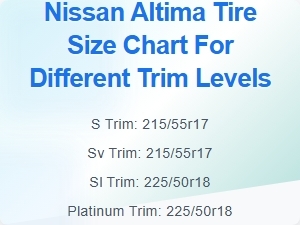 Nissan Altima Tire Sizes for All Trim Levels