Changing tire size on a 2005 Nissan Altima affects both fuel economy and handling in ways that matter to everyday drivers. If you’ve ever swapped tires for better grip, winter performance, or just a different look, you’ve likely noticed how the car feels different on the road. That’s not just your imagination it’s because tire size directly influences how much energy it takes to move the car forward and how the vehicle responds when turning or braking.
How does changing tire size affect fuel economy?
When you go up or down in tire diameter, you’re altering the gear ratio between the engine and the wheels. The 2005 Altima comes with specific factory tire sizes usually 195/65R15 or 215/55R16 depending on trim level. Going to a larger diameter tire means the wheel turns fewer times per mile. This can make the speedometer read slower than actual speed, but more importantly, it forces the engine to work harder to maintain speed, especially at highway speeds.
For example, switching from a 195/65R15 to a 215/60R16 increases the overall tire diameter by about 1 inch. That small change adds strain on the drivetrain and reduces miles per gallon. You might see a drop of 1–3 MPG under normal driving, depending on conditions and driving habits. Smaller tires (like going to a 185/70R14) can sometimes improve fuel efficiency slightly, but only if they fit properly and don’t interfere with suspension components.
What happens to handling when you change tire size?
Handling changes are often more noticeable than fuel economy shifts. Larger or wider tires increase grip and stability during cornering, which can feel great on dry roads. But they also add weight and rolling resistance. If the new tires aren’t matched to the original size, the ABS and traction control systems may not function correctly because they rely on consistent wheel speed data.
A common mistake is installing tires with a significantly different circumference. For instance, using a 225/50R16 instead of the OEM 215/55R16 alters the effective gear ratio. This can cause the speedometer to be off by 5% or more, meaning you're actually going faster than the gauge shows. That’s dangerous and could lead to unintentional speeding fines.
Why sticking to OEM specifications matters
The original equipment manufacturer (OEM) tire size is chosen for a reason. It balances ride comfort, fuel efficiency, and safety. Deviating from it without careful planning risks compromising the vehicle’s electronics, warranty terms, and long-term reliability. Even if the new tires physically fit, the difference in diameter can trigger warning lights or reduce the accuracy of onboard systems.
Before making any change, check your tire size chart based on your Altima’s trim and model year. Some trims come with different front and rear sizes, so ensure both sides match unless you're intentionally using staggered setup which isn't recommended for this model.
Common mistakes when upgrading tires
- Assuming all “compatible” tires will work the same size, width, and aspect ratio must align.
- Ignoring the impact on speedometer readings many drivers don’t realize their speed is off until they get a ticket.
- Using winter tires that are too large or wide, which can rub against fenders or suspension parts.
- Skipping a test drive after installation handling quirks like pulling to one side or vibration may not show up right away.
Real-world tips for safe tire changes
If you want to switch to winter tires, stick to the recommended sizes listed in the winter tire guide. These recommendations account for clearance, load capacity, and compatibility with electronic stability control. Using non-OEM sizes can cause issues with snow mode or traction algorithms.
Always measure the distance between the tire and fender well before and after installation. A few millimeters of clearance are needed to prevent rubbing during turns or over bumps. Also, keep an eye on tread wear patterns uneven wear can signal improper alignment or mismatched sizing.
What should you do next?
Before buying new tires, confirm your current size. Check the sidewall or the driver’s door jamb sticker. Then compare it to the factory specs for your exact model. If you’re considering a change, use the fitment guide to evaluate what’s safe and practical.
Consider keeping the same size for consistency. If you need better winter performance, choose a winter tire in the correct size rather than changing the diameter. It’s easier, safer, and keeps your car running as intended.
For inspiration on clean, readable design, explore font name a free resource for typographic clarity that mirrors the straightforward tone used here.
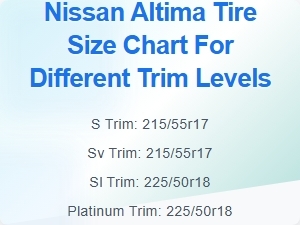 Nissan Altima Tire Sizes for All Trim Levels
 Verifying Correct Tire Size with Your Owner's Manual
 Choosing the Right Winter Tires for Your Nissan Altima
 Understanding Nissan Altima Stock Wheel Specifications
 Nissan Altima Original Tire Dimensions and Oe Specifications
 Determining Your Altima's Optimal Tire Pressure