Knowing the correct Nissan Altima stock wheel size specifications helps you keep your car running safely and efficiently. If you’re replacing tires or wheels, getting the right size matters more than just fitting a rim. Using the wrong size can affect handling, fuel economy, speedometer accuracy, and even void your warranty.
What are Nissan Altima stock wheel size specifications?
The stock wheel size for a Nissan Altima depends on the model year. Most versions come with 16-inch or 17-inch wheels, but some newer models use 18-inch rims. The exact size is listed in the owner’s manual and on the driver’s side door jamb sticker. It includes the rim diameter, width, bolt pattern, and offset.
For example, a 2019 Altima typically has a 17x7.0-inch wheel with a 5x114.3mm bolt pattern and +42mm offset. These details ensure the wheel fits properly without rubbing against suspension parts or fenders.
When do you need to check stock wheel size specs?
You should check the original specs when:
- Replacing worn-out tires
- Buying new aftermarket wheels
- Installing a lift kit or lowering springs
- Fixing a flat tire and needing a temporary spare
If you're upgrading wheels, sticking to the factory size prevents issues like improper clearance or sensor malfunctions. Going too wide or too tall can cause the tire to rub during turns or affect steering alignment.
How do I find my Altima’s exact stock wheel size?
Look at the tire sidewall. A common size like 225/55R17 means the tire is 225mm wide, has a 55% aspect ratio, and fits a 17-inch rim. The wheel size itself isn’t written on the tire, but it’s matched to that number.
Check the inside of the driver’s door jamb. There’s usually a sticker with tire and wheel information. You can also refer to the official Nissan Altima stock wheel size specifications page for detailed data by model year.
Common mistakes when changing wheels on an Altima
One frequent error is using wheels with a different bolt pattern. The Altima uses a 5x114.3mm pattern, so mismatched bolts won’t fit. Another issue is ignoring the offset. Too much positive offset can push the wheel too far inward, causing contact with the suspension.
Also, don’t assume all 17-inch wheels are interchangeable. Even if the diameter matches, the width and offset must align. A 17x7.5-inch wheel might not fit the same as a 17x7.0-inch one, especially on sportier trims.
What happens if I use the wrong wheel size?
Using incorrect wheel dimensions can lead to several problems. Your speedometer may show inaccurate speeds because the tire’s circumference changes. This affects driving safety and could result in speeding tickets.
Improper fitment may cause vibrations at highway speeds. You might also damage the ABS sensors or cause uneven wear on tires and suspension components. In extreme cases, a loose or improperly mounted wheel can come off while driving.
Best practices for maintaining proper wheel size
Always replace tires with the same size listed in the factory specs. If you want to go wider or taller, consult a professional mechanic first. Make sure the new setup doesn’t interfere with the fender, brake calipers, or suspension arms.
After installing new wheels, have the alignment checked. This ensures the tires wear evenly and the car handles correctly. Don’t forget to adjust tire pressure accordingly recommended inflation pressure varies by tire size.
Next steps: What to do now
Grab your owner’s manual or open the door jamb sticker. Write down the wheel size and tire code. Then, confirm it matches the latest specs on the Nissan Altima stock wheel size specifications page. If you're planning upgrades, take those numbers to a trusted tire shop for advice.
If you’re replacing tires on a 2005 model, you can cross-check the factory setup at this dedicated resource.
For inspiration on how fonts enhance vehicle branding and design, explore font name.
 Nissan Altima Original Tire Dimensions and Oe Specifications
 Determining Your Altima's Optimal Tire Pressure
 Original Altima Factory Rim and Tire Specifications
 Selecting the Correct Tires for Your Nissan Altima 2.5s
 Changing Tire Size Affects Altima Fuel Economy and Handling
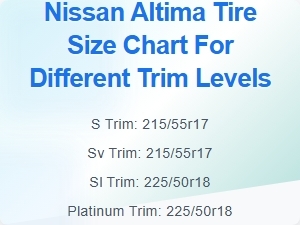 Nissan Altima Tire Sizes for All Trim Levels