Choosing the right winter tires for your Nissan Altima starts with understanding what the manufacturer originally specified. Using tires that match your vehicle’s OEM (Original Equipment Manufacturer) size and load rating ensures safety, handling, and performance in snow and ice. If you’re looking for reliable winter tire recommendations based on OEM specifications, you’re not just picking tires you’re making a practical choice that keeps you safe when roads get tough.
What does "OEM specifications" mean for Nissan Altima winter tires?
OEM specs are the tire sizes, load indexes, and speed ratings set by Nissan when your Altima left the factory. These details are designed to work perfectly with your car’s suspension, braking system, and electronic stability controls. For example, a 2019 Nissan Altima might come with 235/50R18 tires, while a 2005 model uses 215/60R16. Going off these numbers isn’t just about fitting it’s about maintaining how your car behaves on slippery surfaces.
Using a different size can affect traction, steering response, and even the accuracy of your speedometer and odometer. That’s why checking your OEM specs first is essential before buying winter tires.
How do I find my Nissan Altima’s original tire size?
The easiest place to start is your driver’s side door jamb. There’s a sticker listing the recommended tire size, load index, and pressure. If that’s faded or missing, check your owner’s manual. This guide walks through finding the correct size using the manual, which is especially helpful if you own an older model like the 2005 Altima.
If you’re unsure, look up your VIN at a trusted automotive site or visit a local tire shop. They can pull your exact specs from your vehicle’s build record. Never guess using the wrong size can reduce grip and increase stopping distances in winter conditions.
Can I use a different winter tire size than OEM?
Technically, yes but only within small tolerances. Most manufacturers allow a slight variation in width or sidewall height, but anything beyond that risks affecting your car’s handling. For instance, switching from 235/50R18 to 245/45R18 changes the overall diameter, which impacts speed readings and could trigger warning lights on your dashboard.
A good rule: stay within ±3% of the original tire’s diameter. If you're unsure, compare the new tire’s dimensions to the OEM specs using a calculator or consult a tire professional. This article explains how changing tire size affects fuel economy and handling, which matters just as much in winter driving.
What should I look for in winter tires for my Altima?
Look for tires rated for severe snow service marked with the three-peak mountain snowflake symbol (3PMSF). This means they’ve passed tests for traction in deep snow and icy conditions. Not all winter tires have this label, so don’t assume all “winter” tires are equal.
Also consider tread depth. New winter tires should have at least 8/32 inch of tread. As tread wears down, grip in snow drops significantly. Avoid used tires unless you know their history and wear level.
Stick to brands known for consistent performance in cold weather. Michelin X-Ice Xi3, Bridgestone Blizzak WS80, and Continental WinterContact TS 860 are often recommended for cars like the Altima because they balance grip, noise, and longevity.
Common mistakes people make when choosing winter tires
- Skipping the OEM size: People sometimes go wider or taller tires thinking they’ll improve grip. But that can cause issues with clearance, speedometer errors, and even damage to suspension components.
- Using all-season tires in heavy snow: All-season tires aren’t built for extreme winter conditions. They’ll struggle on packed snow and black ice.
- Buying tires without checking load capacity: Your Altima has a specific weight limit per tire. A lower load index may not support your car, especially when loaded with passengers or gear.
Practical steps to take next
Start by confirming your Altima’s original tire size. Then, pick winter tires that match that size and carry the 3PMSF symbol. Don’t mix brands or tread patterns on the same axle keep them balanced for safety. When installing, get them mounted and balanced properly, and consider having your alignment checked afterward.
For more help, refer to this detailed breakdown of OEM-based winter tire options. It includes real-world examples across different Altima generations and clear guidance on matching tires to your car’s needs.
And if you’re exploring unique styling for your winter setup, font name offers clean, readable typefaces that pair well with any winter-ready car aesthetic though that’s a detail for another day.
 Changing Tire Size Affects Altima Fuel Economy and Handling
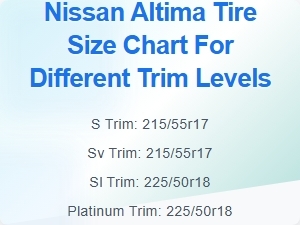 Nissan Altima Tire Sizes for All Trim Levels
 Verifying Correct Tire Size with Your Owner's Manual
 Understanding Nissan Altima Stock Wheel Specifications
 Nissan Altima Original Tire Dimensions and Oe Specifications
 Determining Your Altima's Optimal Tire Pressure