Keeping your Nissan Altima properly inflated is one of the simplest ways to ensure safe driving and better fuel efficiency. The recommended tire inflation pressure for your Altima isn’t just a number on a sticker it’s a setting that affects how your car handles, how long your tires last, and even how much you spend at the pump.
What is the correct tire pressure for my Nissan Altima?
The ideal tire pressure for most Nissan Altima models is listed on a sticker inside the driver’s door jamb. For example, many 2005–2012 Altimas recommend 32 psi (pounds per square inch) when the tires are cold. This is the standard pressure used by Nissan for optimal performance and safety under normal conditions.
Always check the pressure when the tires haven’t been driven on for at least three hours or after a short drive of less than a mile. Driving heats up tires, which increases pressure readings and can give a false sense of accuracy.
Why does tire inflation matter for my Altima?
Underinflated tires wear out faster, reduce fuel economy, and increase stopping distances. Overinflated tires can lead to a harsher ride, reduced traction, and uneven wear patterns. Staying within the recommended range helps maintain balance between comfort, safety, and efficiency.
For instance, if your Altima’s tires are running 5 psi below the recommended level, you could see a noticeable drop in gas mileage often around 3% to 4% more fuel consumption over time.
Where can I find the exact pressure for my model year?
If you’re unsure what your specific Altima needs, the best place to look is the original equipment (OE) tire size specifications. These details include the proper inflation pressure and are often tied directly to the vehicle’s weight, suspension setup, and handling design.
You can find a full breakdown of your Altima’s original tire dimensions and recommended pressures in this guide: original tire size specs for your Altima. It includes everything from tire width to load index, so you’re not guessing when replacing tires.
How do I check and adjust tire pressure?
Use a digital or dial-style tire gauge. These tools are more accurate than the old stick-type gauges found in some gas stations. Here’s a quick routine:
- Check all four tires when cold.
- Compare the reading to the recommended pressure on the door jamb sticker.
- Add air if needed, using a compressor at a gas station or portable pump.
- Recheck after adding air to confirm the right level.
Don’t rely solely on the low-pressure warning light. It only activates when pressure drops significantly usually below 25% of the recommended value and won’t catch small, gradual losses.
Common mistakes people make with tire pressure
One frequent error is adjusting pressure based on the maximum PSI listed on the tire sidewall. That number is the highest safe pressure for the tire itself, not what your Altima needs. Using it as a target can lead to overinflation and poor handling.
Another mistake is ignoring seasonal changes. Cold weather naturally lowers tire pressure. A 10°F drop can reduce pressure by about 1 psi. Checking once a month even in winter is smart practice.
When should I recheck tire pressure?
Make it a habit to check every few months, especially before long trips. Also, check after a major temperature shift or if you’ve hit a pothole or curb. Even a small puncture can cause slow leaks that go unnoticed without regular checks.
When replacing tires, always verify the new ones match the OE size and pressure recommendations. You can refer to this detailed tire replacement guide to avoid mismatched sizes and incorrect inflation settings.
Final tip: Keep a log
Write down your tire pressure every time you check it. This helps track trends like gradual loss over weeks and makes it easier to spot problems early. A simple notebook or phone note works fine.
Remember: your Altima performs best when its tires are at the right pressure. It’s a small effort with real benefits. Take a minute today to check them.
- Find the correct pressure on the driver’s door jamb sticker
- Check tires when cold (not driven for 3+ hours)
- Use a reliable tire gauge, not just a gas station pump
- Verify new tires match the OE size and pressure specs
- Recheck monthly or before long drives
For reference on font styles used in official Nissan documentation, consider exploring font name for clean, readable typography.
 Understanding Nissan Altima Stock Wheel Specifications
 Nissan Altima Original Tire Dimensions and Oe Specifications
 Original Altima Factory Rim and Tire Specifications
 Selecting the Correct Tires for Your Nissan Altima 2.5s
 Changing Tire Size Affects Altima Fuel Economy and Handling
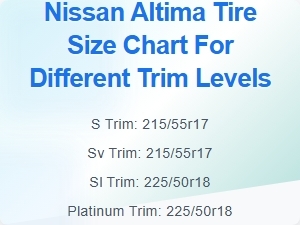 Nissan Altima Tire Sizes for All Trim Levels