Choosing the right all-season replacement tires for your 2005 Nissan Altima means staying safe and comfortable year-round, especially when you’re sticking to the stock tire size. The original size 215/60R16 is designed to match your car’s handling, braking, and fuel efficiency. Using a different size can affect how your car performs, even if it looks similar.
What does “best all-season replacement tires for 2005 Nissan Altima stock size” mean?
It means finding tires that fit your Altima’s original 215/60R16 dimensions and are built for all seasons good in light rain, mild snow, and dry pavement. These tires aren’t winter-specific but handle moderate conditions better than summer tires in colder weather. They’re ideal if you don’t want to switch between summer and winter tires each year.
You might need new tires after 40,000 to 60,000 miles, or when tread wear indicators show. If your current tires are cracked, unevenly worn, or make noise on smooth roads, it’s time to replace them. Sticking to the stock size helps avoid issues with speedometer accuracy, suspension stress, and warranty problems.
Which all-season tires work best for a 2005 Nissan Altima?
Look for tires that meet the 215/60R16 size and have strong reviews for durability, quiet ride, and traction. Some top performers include:
- Michelin Defender T+H – Offers long tread life and reliable performance in wet and light snow.
- Continental PureContact LS – Great for highway comfort and fuel efficiency, with solid grip in rain.
- Goodyear Assurance WeatherReady – Designed for mixed conditions, with good handling in both rain and cold temps.
- Bridgestone Turanza QuietTrack – Known for low road noise and consistent handling on dry and wet roads.
These tires are tested under real-world conditions and have proven effective on vehicles like the 2005 Altima. They balance performance, safety, and value without straying from OEM specs.
Why stick to the stock size (215/60R16)?
Your 2005 Altima was built around this size. Changing it even by a small amount can alter how the car handles, brakes, and uses fuel. For example, a wider tire may improve grip but increase rolling resistance, hurting mileage. A taller sidewall could reduce steering precision.
If you're unsure what size to use, check the driver’s side door jamb sticker or refer to your vehicle’s original tire specifications. This ensures you stay within safe limits for speed, load capacity, and alignment.
Common mistakes when replacing tires
One mistake is picking a tire just because it’s cheap or has a flashy name. Some tires labeled “all-season” perform poorly in cold weather or wear out fast. Another error is ignoring tread depth new tires should have at least 8/32 inch of tread. Driving on tires below 4/32 inch increases stopping distance, especially in rain.
Also, don’t forget to rotate tires every 5,000 to 7,500 miles. Uneven wear reduces lifespan and affects handling. And always get a proper wheel alignment after installing new tires, especially if you’ve had alignment issues before.
How to choose the right one for your driving habits
If you drive mostly on highways and city streets with occasional rain, a tire like the Continental PureContact LS gives a smooth, quiet ride. If you live in a place with light snow or freezing temperatures, go for something rated for cold-weather traction like the Goodyear Assurance WeatherReady.
For drivers who prioritize fuel savings, look for tires with low rolling resistance. OEM-sized tires help maintain factory fuel economy, so choosing a model that matches the original design keeps your mileage where it should be.
What to do next: A simple checklist
- Confirm your tire size is 215/60R16.
- Check tread depth on old tires replace if below 4/32 inch.
- Compare top-rated all-season tires for balance of price, longevity, and performance.
- Read recent user reviews on real driving conditions, not just lab tests.
- Buy from a trusted shop that offers installation, balancing, and disposal of old tires.
- Get a wheel alignment after mounting new tires.
- Set a reminder to rotate tires every 5,000–7,500 miles.
For more guidance on winter readiness and tire choices in colder climates, see how stock sizes perform in winter.
Font choice matters too especially if you're designing a sign or label for your car. Try font name for clean, readable text that stands out on the road.
 Discover Nissan Altima Tire Sizes for Safer Highway Driving
 Navigating Winter Roads: Nissan Altima Tire Size Advice
 Performance Tire Comparisons for Nissan Altima Factory Wheels
 Understanding Nissan Altima Stock Wheel Specifications
 Changing Tire Size Affects Altima Fuel Economy and Handling
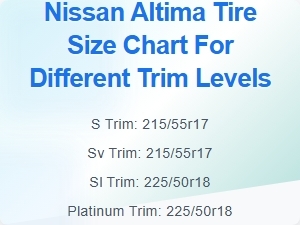 Nissan Altima Tire Sizes for All Trim Levels